
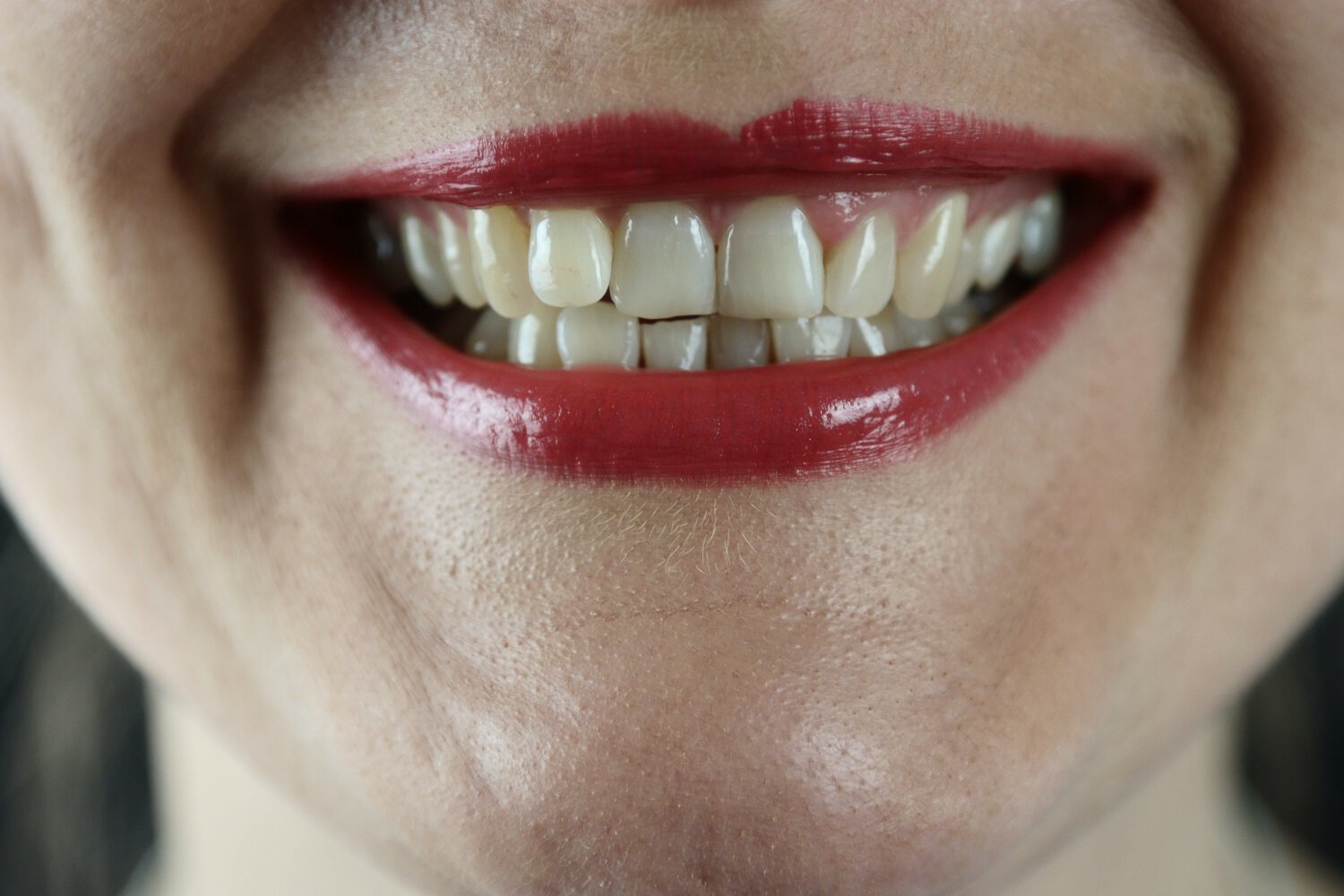
A worn tooth doesn’t always look damaged.
Sometimes the first sign is a canine that has lost its sharp edge, a front tooth that looks slightly shorter than the one beside it, a crown that chips again, or tooth enamel that has started to look unusually flat and polished. Most people notice when something hurts or breaks, but the smaller changes can say quite a bit about how the teeth, bite, jaw muscles, and temporomandibular joint are working together.
Dr. Eddie Siman looks at the wear pattern before it gets that far.
For a dentist who treats TMJ disorder, tooth wear can provide useful evidence about how much force is moving through the mouth, how the teeth are meeting, and what may be happening during sleep. It does not mean every worn tooth predicts severe joint damage, but it can be a sign that grinding, clenching, or another mechanical issue has been building over time.
Teeth are supposed to change with age. They chew food thousands of times a year, and some enamel wear is normal, but the pattern becomes more interesting when wear is concentrated in certain places, progresses faster than expected, or appears alongside other symptoms.
Bruxism, including teeth grinding and clenching, can flatten the biting surfaces of the teeth, wear down canine tips, create small chips, and put repeated stress on crowns, veneers, and fillings. Dentists may see smooth contact areas where opposing teeth have been rubbing against each other.
That does not prove bruxism on its own. Acid erosion, reflux, brushing habits, diet, chewing gum, medications, and other contributing factors can also affect tooth enamel. A proper dental evaluation looks at the combination of findings, including which teeth are worn, how the bite comes together, where the jaw is moving, and what symptoms the patient is reporting.
A patient with mild tooth wear and no discomfort presents a very different case from someone with the same wear plus jaw pain, headaches, facial pain, neck stiffness, or morning muscle tension.
During grinding or clenching, the teeth are not taking the force by themselves. The jaw muscles contract, the surrounding muscles stabilize the movement, and the temporomandibular joint guides the lower jaw.
If that pattern continues through the night, the system can stay under load for long periods of time.
This is where patients sometimes begin connecting symptoms they had treated as separate problems. Headaches may have been blamed on stress, neck pain on posture, facial tension on anxiety, and broken teeth on bad luck. Then the dental evaluation shows a consistent wear pattern, signs of grinding, or repeated damage to restorations.
The wear does not diagnose TMJ disorder by itself. It gives Dr. Siman another piece of the case.
Research has found an association between bruxism and temporomandibular disorders, but one does not automatically cause the other in every patient. That distinction matters because the treatment should depend on the diagnosis, not on the assumption that every person who grinds has the same problem.
A chipped veneer can be replaced, a fractured crown can be remade, and broken teeth can be restored.
Dr. Siman’s background in cosmetic dentistry shaped the way he approaches TMJ. When dental work repeatedly takes more force than expected, simply replacing the restoration may leave the same bite, muscle activity, and grinding pattern in place.
If a patient is grinding against the same area every night, the new porcelain still has to absorb the same force. That is why Dr. Siman looks at the bite before planning larger restorative or cosmetic cases, especially when there is already evidence of bruxism, jaw tension, or tooth wear. Sometimes the visible damage is only the part you can see.
Most people picture severe bruxism as teeth that have been ground nearly flat, but the early signs can be much smaller.
The front teeth may become uneven, the canines can lose their pointed shape, small chips may appear without a clear injury, tooth enamel can become sensitive, or fillings and porcelain restorations may begin wearing sooner than expected. Some patients also notice morning jaw pain, headaches, facial pain, stiffness, clicking, or fatigue in the jaw muscles after eating.
Those are common bruxism symptoms, but they still need to be assessed in context. Sleep bruxism, awake bruxism, stress, anxiety, medications, alcohol consumption, sleep disorders, bite problems, and other factors can all influence how much grinding or clenching occurs.
Photographs and regular dental care can also help determine whether the wear is stable or continuing to progress. A pattern that changes over time carries more information than a single worn edge seen once.
In the right patient, a custom-made device like a night-guard can help protect the teeth from direct grinding damage, but it does not explain why the grinding is happening.
One patient may have awake bruxism during periods of stress and make a conscious effort to relax the jaw during the day. Another may have sleep bruxism and know nothing about it until a partner hears grinding at night. Someone else may have a bite that keeps the jaw muscles overactive or a sleep disorder that changes breathing and jaw position.
Dr. Siman evaluates the bite, jaw position, muscles, joint function, tooth wear, and symptoms before determining what kind of treatment makes sense. His office also uses in-house CT imaging and biometric equipment when the joint or surrounding structures need a closer look.
The goal is to avoid treating every worn tooth with the same device and assuming the problem is solved.
Morning symptoms can provide useful clues, especially when grinding appears to happen overnight.
If someone wakes with a sore jaw, headaches, dry mouth, facial pain, or stiffness, Dr. Siman also wants to know how that person sleeps. Snoring, interrupted breathing, waking up gasping, poor sleep quality, or family members noticing pauses in breathing can point toward a broader sleep issue.
Sleep bruxism and obstructive sleep apnea can occur in the same patient. One does not automatically mean the other is present, but the combination makes sleep and breathing relevant to the diagnosis.
Jaw position can matter here too. In some patients, treatment that affects the lower jaw or brings the jaw forward may also influence the airway, which is why TMJ and sleep should not always be evaluated as separate systems.
A small worn edge with no pain and no progression may only need monitoring. The picture changes when the wear is advancing, several teeth are involved, restorations keep failing, or the patient is also dealing with jaw pain, headaches, facial discomfort, grinding, clenching, or difficulty eating.
Left unchecked, repeated mechanical stress can lead to more tooth wear, damaged restorations, sensitivity, muscle discomfort, and ongoing strain through the jaw. That does not mean every case will become severe, but ignoring a pattern that continues to progress can increase the risk of more complicated dental and TMJ problems later.
At TMJ Expert, Dr. Siman looks at the combination of evidence, including the teeth, bite, jaw muscles, temporomandibular joint, sleep, breathing, and oral health. That broader evaluation helps identify which factors matter in the individual case and which do not.
If you have noticed unusual tooth wear, repeated chips, broken teeth, grinding, morning jaw tension, or dental work that does not seem to hold up, schedule a consultation with Dr. Siman. He can examine the wear pattern, assess the bite and joint, and determine whether the damage is limited to the teeth or part of a larger TMJ or bruxism problem.
Dr. Eddie Siman has over 35 years of experience and is a premier TMJ and Sleep Apnea expert in Los Angeles and Orange County. Many come to Dr. Eddie Siman with severe tinnitus, migraine problems, and sleep apnea with no relief in sight. Little do these patients know that their painful symptoms are tied to the Temporomandibular joint (TMJ). Think outside the box and pay a simple visit to Dr. Siman today so you can finally find the source of all your pain and get rid of it once and for all.
Schedule your Private Consultation and Diagnosis Appointment with Dr. Siman Expert TMJ, Cosmetic Dental, and Sleep Apnea Treatments.
Call today (818) 574-5009
14629 Ventura Blvd, Sherman Oaks, CA 91423
414 N. Camden Drive Suite #1240, Beverly Hills, CA 90210
Enter your name and email, and we'll give you a downloadable/printable PDF checklist to bring to any consult - including ours.